In 1856, 200 women, some of them wielding hatchets, rampaged through the town of Rockport, Massachusetts destroying every container of alcohol they could find. When the “four-hour raid” was over the women had spilled hundreds of gallons of liquor. The Temperance Movement was in full swing. New York had established the first temperance organization with Massachusetts being the second, the formation of which became known as the Massachusetts Temperance Society. Women made up most of the members. By 1833 the group escalated their strategy by requiring all members to sign an absolute pledge of abstinence from all liquor. The women linked the temperance fight to, in part, domestic abuse and lack of finances from husbands who came home drunk and they advocated for the outlaw of liquor for their own safety.
While Medfield did not see women marching through the town streets, the town did have its share of conflicts over the temperance issue. During the 19th and the early 20th century, the Temperance Movement in Medfield was a powerful social force. It influenced the town voters resulting in votes to keep the town “dry”; i.e., free from issuing licenses for the sale of alcohol. The Massachusetts Temperance Movement was able to pressure the legislature to enact a local option law where each community would vote annually whether they would permit or not permit the sale of alcohol within the town limits. By 1845, 100 Massachusetts towns had voted to go “dry”. But the battle between “wets” and “drys” brought great division in many communities.
Early on, Medfield residents voted to have the town “dry,” eliminating the sale of liquor in town including at the town’s three hotels and Inns. In one famous case, Reverend Nathan Dryer, pastor of the Second Congregational Church (today’s UCC Church) led an active campaign bringing unlawful sellers of alcohol to account, as Medfield was a “dry” town. He also organized groups of “spotters” who kept an eye on the town trying to secure any evidence of illegal sales.
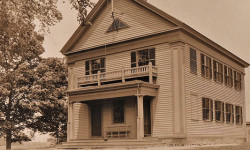
Alcohol was clearly an issue in the town and many felt that Medfield had developed a reputation for open drinking in defiance of the law. In1887 the Dedham Transcript reported that a 13-year-old Medfield boy was found so drunk that he couldn’t stand up. And in 1892 the Dedham Transcript reported that 27 empty liquor bottles were found in Chenery Hall (the former second floor hall in Town Hall) after a dance. The reporter called Medfield “a place where the boys can get drunk on a liberal supply of liquor and get off scott-free”. Perhaps because of this reputation, Medfield soon became the regional hub for famous temperance activists. The renowned orator John Augustus Bolles delivered a historically celebrated speech at a major Medfield temperance rally. The speech strongly advocated for total sobriety. The Medfield Temperance Society was formed, holding frequent community events, dances and strategic meetings, but they did not have total town-wide support. The Old Baptist Meetinghouse on West Main Street was the site of the only public hall in the town where temperance meetings could be held. During temperance meetings the galleries were often filled with not so very sober townspeople who interrupted the speakers with “cat calls.” Eggs and dead animals were known to have been thrown at the speakers or at prominent citizens in the audience.
Medfield voters continued to keep the town dry until 1899 when, for the first time, on a 112 to 92 vote, the town approved the issuing of liquor licenses making Medfield the only town in Norfolk County allowing saloons, inns and hotels to serve alcohol. With that, the Medfield Inn on North Street opposite Frairy Street, the Hotel Gerald on West Mill Street and the Lincoln Inn at 63 Harding Street obtained liquor licenses.
Medfield remained a “wet” town until 1910. By then the Temperence Movement nation-wide and in Medfield had gained increased popularity. By 1911 Medfield returned to being a “dry” town by a 50-vote margin. It remained a dry town through the adoption of Prohibition in 1920 which outlawed the manufacturing and sale of alcohol nationwide.
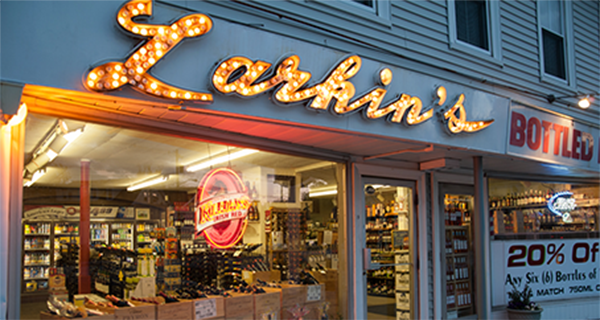
Prohibition ended in 1933. On November 6, 1934, the voters in Medfield, by a 445 to 315 vote, approved the town’s ability to issue a permit for the sale of alcoholic beverages. In 1935 Larkin’s Medfield Package Store opened, making it today the oldest continuously operating business in the town of Medfield.