



By Isabell Macrina
Hometown Weekly Reporter
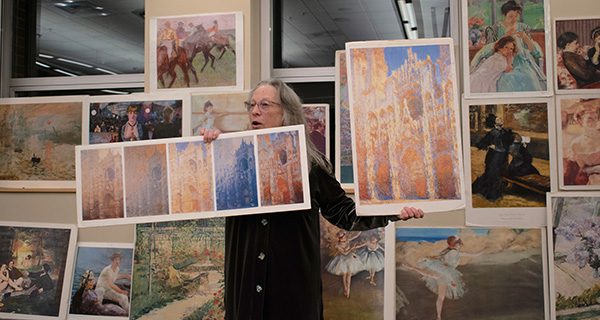
Art has been at the center of communities since the dawn of civilization. Imagine a water ripple, where the first ring influences everything around it, that is what the Impressionist movement did to the art scene in Paris and beyond. Jane Blair from ArtMatters came to Walpole Public Library to take us through Impressionism and the people who would go on to inspire iconic artists for generations.
 Blair started at the beginning of impressionism, where the Paris Salon would pick paintings by local artists to display. It was a highly selective process, and the judges favored traditional art of portraits with near invisible brushstrokes. Édouard Manet wanted to challenge this, after already being accepted in a few times for his portraits. His painting “Le Déjeuner sur l'herbe” was criticized for its provocative nature, but his movement and complaining eventually led to Emperor Napoleon III to declare the salon hold The Salon des Refusés, where all the pieces they rejected would be displayed.
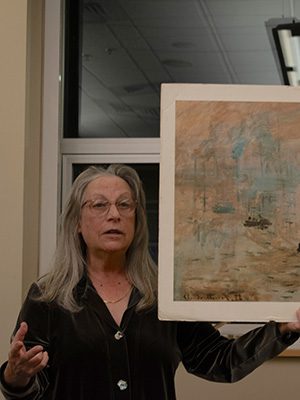
Claude Monet’s painting “Impression, Sunrise” is what gave the impressionists their name. With its brushstrokes and unblended lines, artists would have called it a sketch. It was considered incomplete, so aristocrats and aficionados started calling them “impressionists” in a negative connotation, but the name stuck. Impressionists would go on to host their own salons, showing off their paintings to rival the Paris Salon.
 At the center of Impressionism was the inner ring, as Blair puts it. These artists were the ones who set it in motion and kept it going. There was Manet the leader, Edgar Degas the rebel who was known for defying composition standards with off center models, Mary Cassatt was the financial advisor who would sell their art to keep the movement going. Berthe Morisot was the psychologist who, with Cassatt, would host their own parlor events that they would not need chaperoning to. Pierre-Auguste Renoir was the romantic, capturing people in moments of joy, excitement and activity. Monet was the engine, he kept everyone going despite loosing a bit of money himself, and Camille Pissarro was the glue; older than the others, he held them together through the rougher times. Together these artists would meet, discuss art and life, paint together, often in Monet’s Argenteuil home so people would paint the same scene in their different styles. This inner ring created a storm by the end of the century. Their influence and energy over the city would go on to inspire other artists like Picasso and would change the way we look at art forever.
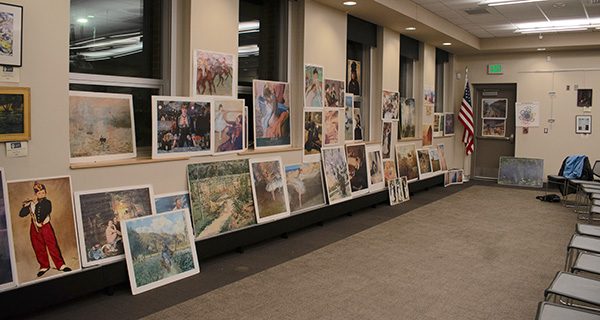
Jane Blair brought the movement to life with prints of paintings, engaging us in their life stories and bringing them around the room like she built a museum around us.