By Isabell Macrina
Hometown Weekly Staff
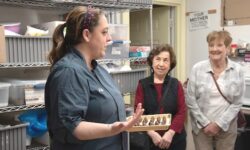
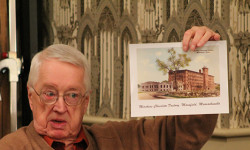
New England has a few standout treats that have become synonymous with the region: fluffernutters, whoopie pies, fig newtons, and more. Susan Mara Bregman, author and sweets lover herself, came to Wellesley Free Library to share some of the history she uncovered when researching for her book New England Sweets: Doughnuts, Bonbons, and Whoopie Pies (The History Press, 2025), and to bring to light some of the forgotten candies of history.

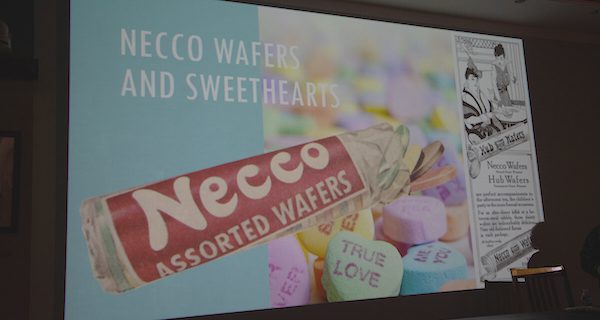
Bregman starts with Oliver R. and Silas Edwin Chase who founded Chase and Company in 1847. They patented the first American candy machines, making sugar wafers (later known as Necco wafers) and the first machines that would print words on candy (also where the famous candy hearts originated). They would later combine forces with Ball and Fobes, and Bird, Wright and Company, to form the New England Confectionary Company, aka Necco.
After Necco filed for bankruptcy and dissolved in 2018, a lot of their candies like Junior Mints were bought out by other companies to continue production. Sky Bars are one of the only ones still made in Massachusetts.
Massachusetts is famed for treats beyond candy. Fig Newtons, named after the city despite originating in Cambridge, were a happy combination of a cookie maker from Ohio, Charles Roser who came up with the recipe, the Kennedy Steve Bakery in Massachusetts, who actually had a lot of treats named after different towns, and an inventor in Philadelphia James Mitchell who developed the machine that could fill cookies with fruit. And in 1891, the cookies went out to the masses.

Of course, you can’t talk about Massachusetts staples without bringing up Dunkin’ Donuts.
Bill Rosenberg opened a restaurant in 1948 called Open Hearth, Open Kettle in Quincy. He renamed it to Dunkin Donuts, started a franchise model, and the shop was born. His son Bob took over as CEO in 1963 and standardized the model, menus, and expanded it nationwide.

“They really try to position themselves as a local Massachusetts, New England coffee shop. And people kind of return the favor because they don’t think of them as a big chain. They think of them as their neighborhood coffee shop and that seems to be part of their whole appeal,” said Bregman.
And she’s right. With over 13,000 stores worldwide today, Dunkin has come a long way from their small origins in Quincy.
Bregman talked about more treats and their stories from New England that shaped the region into the prideful one we know today. To learn more, make sure to check out her book and keep your eyes out for future events.