By Isabell Macrina
Hometown Weekly Staff
With spring on the horizon and people anxious to get back in the garden, it was the perfect time for Dover Town Library to host Composting 101.
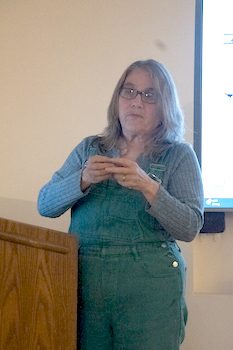
Kate Donovan from Blackstone Valley Veggie Gardens hosted an informal lecture to help everyone understand the basics of compost and be ready to start their own system at home.
Composting is a biological necessity; in breaking down organic matter, the decay makes a nutrient rich fertilizer that can be added to gardens and aid in plant growth. But it needs to be done right, otherwise it can become overwhelming in smell, moisture, and won’t optimize the nutrients it provides.
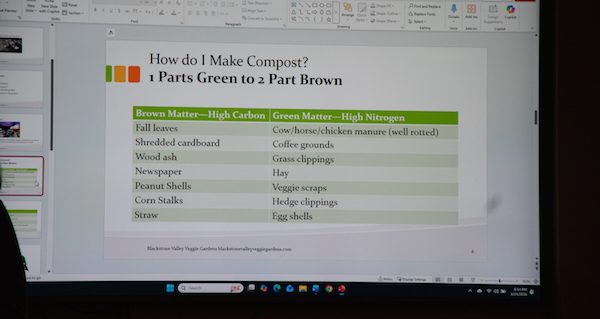
Donovan starts with showing a sample video illustrating a homestead’s composting system, which was comprised of two bins and a pallet under it. Through the stages of decomposition, they transfer it from one bin to the next, and from there into the earth. Compost is fondly called “Black Gold” because of the nutrients it provides to plants. Anyone can get started with it! All you need are bins and two parts brow matter to one part green matter.
Brown matter is the material in compost that is partway through the decaying process and is high in carbon. This includes fallen leaves, shredded cardboard, wood ash, corn stalks, and straw. Most of this will be pretty dry and help keep it from leaking all over the ground around the bins.
Green matter is higher in nitrogen, and is what you traditionally think of when your mind goes to compostable kitchen waste. From coffee grounds to veggie scraps and egg shells, even hedge clippings (provided they aren’t chemically treated). But you can also use cow, horse, or chicken manure in your compost. It is extremely nitrogen rich, but you may want to wait until it dries and becomes old before adding it to avoid the smell.
Despite some manure being great for composting, you shouldn’t just go around throwing pet poop in. Carnivores like cats and dog and even omnivores’ waste can contain bacteria and introducing that to the soil can be hazardous to the plants. Herbivore pets like rabbits’ waste is fine to add. You also should avoid meat and dairy for the same reasons, as well as colored paper, wet grass, and anything chemically treated.
One you get the hang of sorting through your brown and green matter and cycle through the compost a few times, you will have yourself some black gold that can make all the difference in any vegetable or flower garden. For more information check out https://www.blackstonevalleyveggiegardens.com/ for gardening and compost help. Now get some gloves on and get dirty!