

By Isabell Macrina
Hometown Weekly Reporter
Looking back on history is the key to understanding our world, remembering those who came before us. But some of these people end up getting lost to history, through accidents or acts of censorship. Needham Free Public Library (NFPL) hosted Wellesley College Professor Octavio Gonzalez to share his talk about one of these hidden figures. “A Fresh Voice from the Harlem Renaissance: Dorothy Peterson.”
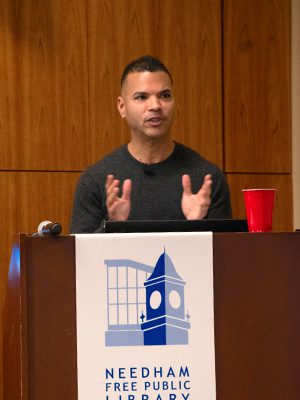 Like many of those in attendance, you may not have heard of Dorothy Peterson despite her being a major player in the events of the Harlem Renaissance as an educator and translator. Gonzalez plans to change that. When researching for his monograph "Misfit Modernism: Queer Forms of Double Exile in the Twentieth-Century Novel,” Gonzalez found that despite Peterson being one of the archivists and helping to promote the James Weldon Johnson Memorial Collection of African American Arts and Letters at Yale University, Peterson herself didn’t appear in the collection. She devoted the last decades of her life to archiving works of the Harlem Renaissance, so why was she missing from it?
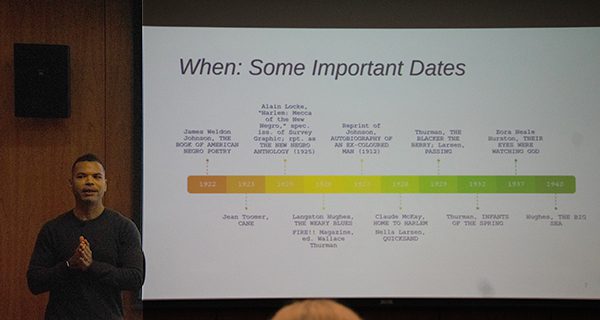
Gonzalez broke down some of the major events and movements during the Harlem Renaissance, which was a cultural blossoming of the arts in visual and verbal spaces during the 1920s and 30s. It was civil rights by copyright. With people of color’s art rising in popularity and desirability, primarily by white social leaders, they used that recognition as leverage in the public spaces.
Dorothy R. Peterson fit into all of this as an actor, translator, educator, author, and archivist. She was involved in many important projects launched while the renaissance was in its heyday. As a translator, she frequently collaborated with Langston Hughes, often considered the central figure of the movement, seeking out Spanish-language poets and offering Huges translations as a basis for adaptation. During this she was a teacher in the New York City public school system, and good friends (possibly more, which is how Gonzalez found her) with renaissance novelist Nella Larsen. Letters between them alluded to a deep connection, and that spiraled to the discovery of this hidden translator.
Anonymous translations were not uncommon during this time period, as it was a multilingual movement, but typically there was some credit given especially if it was done by men. Peterson often translated short stories, leaving herself uncredited so the story would go farther in more publications. She was also an author, and her papers are in some archives but in Hughes’s folders. Her connection to these influential figures hid her own history.
Her collaborations led to overshadowing, even in her own curating of the archive and surviving materials, but Peterson avoided the spotlight. She hid her involvement in important projects to get it moved forward, letting herself fall into the shadows for the greater good of the movement. Her focus on collaboration is one of the reasons we don’t have her collection today, but Gonzalez remains steadfast that Dorothy R. Peterson will not go forgotten again.