By Isabell Macrina
Hometown Weekly Reporter
With Thanksgiving feasts landing on tables around the country, author and former food writer for the Boston Herald, Clara Silverstein, brought us back to look at the first thanksgiving and what they did differently, and how some of our modern traditions were shaped. Her talk “Corn, Chowder, and Cranberry History” looks at colonial New England and what foods from the first Thanksgiving made their way to our tables today, if any.
 Any New Englander can point to chowder and cranberries as a regional staple, but how did they come to be? When the early settlers established the May colony in 1630, they brought with them many plants from home to farm in this world. But the different climate made it so they wouldn’t grow here, so the colonists had to change what they were going to eat. Through learning from the indigenous people, they began to grow corn and it became a staple of their diet. They would eat it in johnny cakes, Indian pudding, and much more.
Chowder is commonly associated with New England, but clams weren’t common in the dish until the 1800’s. The colonists didn’t even like them! Clams were seen as a poor or dirty food, but that eventually changed. Cranberries reminded the settlers of lady berries from their homeland. Even though they were tart, Henry David Thoreau loved them and would go on to write about them. The Thanksgiving staples we know and love weren’t present at that first thanksgiving. In fact, canned cranberry sauce didn’t become common until the 1920’s.
Silverstein shared we only have one primary source from the first thanksgiving. One of the founders, Edward Winslow, lived from 1595-1655 and provides the only page we have giving a description of that first thanksgiving. He described a feat of venison, lobster, and that there were 90 natives to 52 english. They shared a meal, and that didn’t spark a tradition until years later.
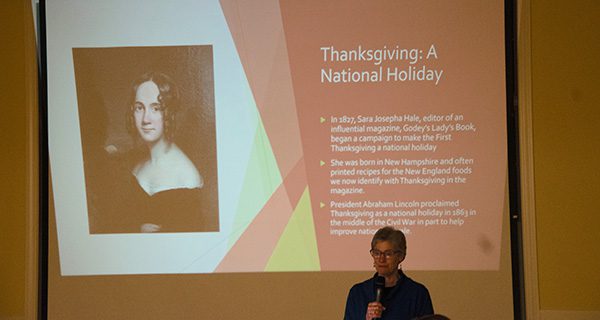
Sarah Josepha Hale began campaigning for Thanksgiving to be a national holiday in 1846, and succeeded in 1863 when President Lincoln approved it as an attempt to unite the country during the Civil War. A writer and editor in two magazines, Hale would go on to publish recipes that were stewed in her New England cooking traditions.
The inspiration for holiday staples came from all over. The cornucopia comes from Greek folklore, an overflowing horn of abundance that was associated with this great feast. Stuffing the turkey gained popularity in the 1800s, with people stuffing vegetables in the bird before turning to bread and later it became its own separate side dish. Even green bean casserole was introduced by Campbell’s soup in 1955 as an easy side dish to make with a can of green beans.
The traditions that make up our national holiday come from all over, but that sets the stage for families to make their own traditions as the years pass. Thanksgiving is about remembering our past, good and bad, and about being grateful to be together.