By Kathryn Gentile
Hometown Weekly Correspondent
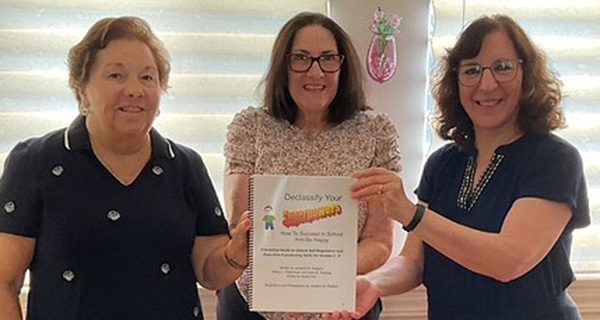
Three alumni of the Westwood Public School special education program, Jocelynn B. Wallach, Nancy L. Williamson, and Joan M. Teebagy have come together to write and publish their own guide to the world of education, self-regulation, and executive function. The workbook, titled “Declassify Your Superpowers: How To Succeed In School And Be Happy”, combines over 25 years of hands-on experience and strategies already developed with students to guide students, parents, and teachers on the best methods to bring out every child’s “superpower”.
The workbook is based on the decades of experience that each of its authors had in their individual fields of education. Wallach was an occupational therapist, spending 25 years in different BNAs and hospitals before finding her way to Westwood Public Schools. Williamson, a speech and language pathologist, had a similar path. The two first met while working in Braintree Rehab Hospital, and when Williamson moved into the Westwood Public School system, Wallach eventually followed. It was there they met Teebagy, who was a special educator and organized evaluations for students with potential disabilities or special needs. In fact, the idea behind these individual “superpowers” came from this aspect of her work. When students would come to her for testing, she wanted to make sure they were not made to feel ostracized or wrong by the process. She informed each student that everyone, regardless of ability, learns differently, and this process was a part of learning what their “superpowers” were and how they learned best. It was her job to help these students, “so [they] can do well in school and [they] can be happy”, and these same ideas created the basis of the workbook.
The workbook contains a number of resources to support students from grades 2 to 8. While the co-authors’ speciality comes from special education experience, the workbook was not created with only disabled children in mind. Instead, it was meant to be more generic, something that could support any student and “anyone who wants to help kids be more successful in school”, said Williamson. “Declassify Your Superpowers” focuses on a number of important skills to support student success, such as executive functioning, organization skills, self-awareness, and homework strategies, among others. It helps develop strategies to improve both performance and experience in school through self-assessments, guided reflections, checklists, and activities that students can pursue on their own or with the help of adults in their life.
One of the most important goals with this project was accessibility. Often, workbooks like this one are targeted solely at educators and professionals, making it difficult for people outside of these fields to support themselves or their children. To combat this, “Declassify Your Superpowers” includes kid-friendly illustrations and language, designed to not only be understandable to children reading it but engaging as well. It also includes a glossary of terms that non-professionals may be unfamiliar with, links to YouTube videos to supplement the content of the book, and recommendations for equipment that may help children with specific issues succeed. It was important to the co-authors that the supplemental material they recommended be effective but not required, as they did not want to give the impression that helping a child succeed requires spending lots of money or utilizing knowledge they may not have. Instead, they wanted to make it clear that anyone can help a child succeed with the right support and the drive to do so.
Alongside the educational portions of the book there are a number of testimonials from former students or their parents. These students worked with each of the co-authors on their own educational journeys and used the strategies that would eventually make up the guide. Their students even had a hand in the name, suggesting the “declassify” portion after the TV series “Ned’s Declassified School Survival Guide”. The contents of the book are tried and true, beginning their life as binders full of activities and notes in Wallach’s classrooms and eventually becoming the fully-fledged book that it is today.